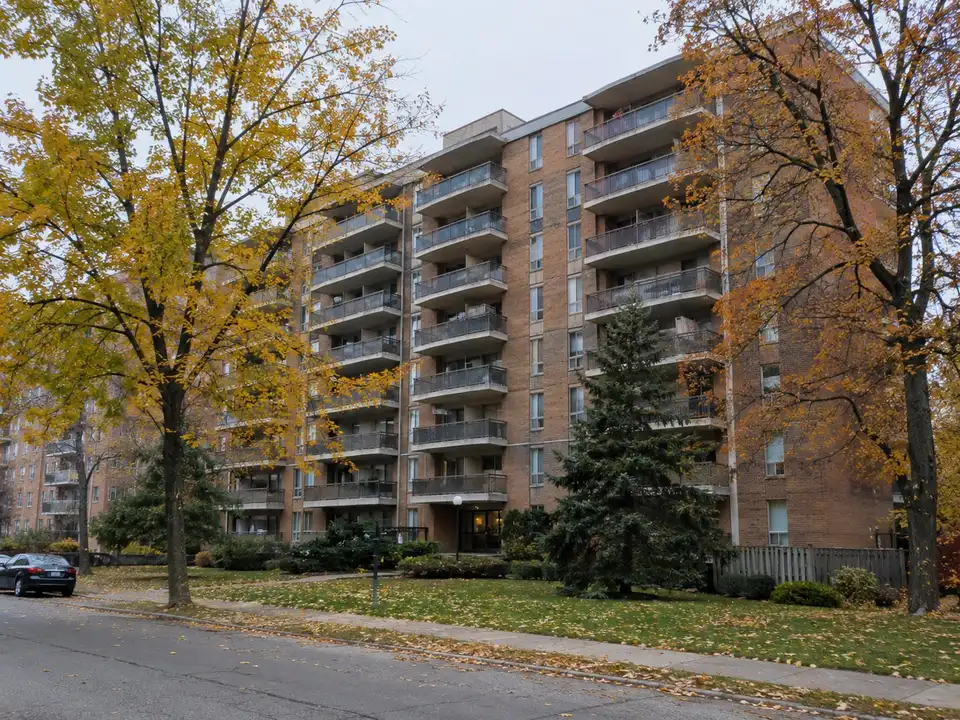
TorontoReverseMortgage.ca explains how a reverse mortgage works on a Toronto condo: which units qualify, what a lender checks in your building, and how much you could get. Condo apartments were 884 of the 1,937 homes sold in the City of Toronto in September 2026, almost half of all sales (TRREB Market Watch, September 2026).
A standard condo qualifies with all four Canadian reverse mortgage lenders: HomeEquity Bank, Equitable Bank, Home Trust and Bloom. The unit is only part of the review: the building and its condo corporation are checked too, and the four lenders don’t always agree about them.
What happens after your free estimate
You start with the free estimate form. The form asks your age, your condo’s value and what you still owe, then shows an estimate on screen. Getting an estimate doesn’t affect your credit.
Next, Richard Hopkins, Mortgage Broker, compares every reverse mortgage lender in Canada for your unit and your building. His email shows which lenders accept your building and the best deal for your unit, so you can read it twice and pass it to family.
For a condo, the building’s address matters as much as your unit number, because the building is checked before you apply. Questions can go by email, phone or video call, and your children can be copied on every message or join a three-way call.
Nothing is signed at this stage, and you can stop at any step. The only meeting in person is with your own lawyer, near the end.
What a lender checks on a Toronto condo
A lender reviews three things on a condo: the unit’s value, the building and its condo corporation, and the location. All four lenders lend across the City of Toronto, so the address is rarely the reason for a no. The building gets the most attention.
The unit and its value
An appraiser values your unit, and the amount you can borrow follows that value. TRREB’s benchmark price for a typical condo apartment in the City of Toronto was $543,800 in September 2026, down 6.36% from a year earlier (TRREB Market Watch, September 2026).
The building and its condo corporation
The condo corporation’s rules must allow the mortgage. Lenders also look for sound finances, reasonable fees and a building in good repair.
The four lenders are not equally comfortable with every building. The same condo, with the same owner and the same value, can get a yes from one lender and a no from another.
Knowing which lender suits which building is part of what a broker brings. Richard checks your building against all four lenders before you apply, so the application goes where your building is accepted. The same review applies when you buy a condo with a reverse mortgage.
Which condos don’t qualify
Leasehold condos and co-ops don’t qualify with any Canadian reverse mortgage lender. In a leasehold condo, the land under the building is leased, not owned. In a co-op, you own shares in the co-operative rather than the unit itself.
Co-ops are a small part of Toronto sales: 4 co-op apartments sold in the City of Toronto in September 2026, compared with 884 condo apartments (TRREB Market Watch, September 2026). Your title documents or your lawyer can confirm which kind of ownership you have.
A condo townhouse is reviewed with its condo corporation, the same way as a condo apartment. A freehold townhouse, with no condo corporation, is treated like a house.
How much you could get on a Toronto condo
The amount depends on your age and your unit’s appraised value. At 70, the most you could borrow is up to about 52.85% of the value, and for a couple the estimate uses the younger spouse’s age. The guide to how much a 70-year-old can borrow in Toronto shows other home types, and the Toronto reverse mortgage calculator takes your own numbers.
The percentage on a condo can be a little different from a detached house, and each lender sets its own limits. Richard’s email shows the real figure for your unit and your building.
Condo fees and property taxes stay yours. A reverse mortgage has no required monthly mortgage payments, but the condo corporation’s monthly fee, the City’s tax bill and the insurance on your unit still need paying. Some owners take part of the money as monthly deposits to cover these costs.
An example on a $543,800 Toronto condo
For example, picture an illustrative widow, 75, who owns a condo apartment in a 1980s mid-rise building in Toronto. Her unit is valued at $543,800, TRREB’s City of Toronto benchmark for a condo apartment in September 2026. She owes nothing on it.
At 75, the most she could borrow is up to about 57.75% of the value, or about $314,000 on $543,800. Before she applies, her building’s finances, fees, repair and rules are checked against all four lenders. Not every lender answers the same way for the same building, so the options in her email come only from the lenders that accept it.
She takes $60,000 as a lump sum for updates inside her unit and some savings for emergencies. Interest is charged only on the $60,000, and she has no required monthly mortgage payments. Her condo fee, property taxes and insurance on the $543,800 unit stay hers to pay.
What it costs and how it is paid back
The advertised 5-year fixed rates at the four lenders ranged from 6.23% to 6.49%, checked October 31, 2026. Interest is added to the balance twice a year, and it is charged only on the money you take.
One-time costs usually come to about $2,000 to $3,500. The total covers an appraisal (usually about $350), the lender’s set-up fee ($995 to $1,795, usually added to the mortgage) and your own lawyer for independent legal advice (about $800 to $1,200 in Ontario). The broker costs you nothing, because the lender pays the broker after the mortgage funds.
The mortgage is repaid when the condo is sold, when the last borrower moves out permanently, or when the last borrower passes away. You or your estate never owe more than the home’s fair market value on the day the mortgage comes due, as long as property taxes, insurance and upkeep are kept up. All four lenders include this promise, typically called the no negative equity guarantee.
Repaying early brings a charge in the first years, either a percentage of the amount repaid or a few months of interest. The charge shrinks over time, and some lenders let you repay up to 10% of the balance each year without one. No charge applies when the mortgage is repaid because the last borrower has died.
The balance grows as interest is added, but rising prices often make up some or all of it. Canadian borrowers keep about half of their home’s value on average. Values can also fall, as Toronto condo prices did over the past year, and the guarantee above covers that case.
The Toronto reverse mortgage cost guide breaks down every fee, and independent legal advice in Toronto explains the lawyer’s role. Selling a house to move into a condo has its own costs, set out in what downsizing in Toronto costs.
What's included when you ask for help
- Checks your building against all four lenders before you apply
- Confirms your unit is a standard condo, not leasehold or a co-op
- Estimates the amount from your age and your unit's value
- Compares every reverse mortgage lender in Canada for your unit
- The best deal for your unit, by email
- Copies your family on every email, if you want
- Guides the application and the appraisal with the chosen lender
- A recommendation based on your situation, even if it's not a reverse mortgage
How the options compare
| Condo apartment | Freehold house | Co-op or leasehold condo | |
|---|---|---|---|
| Qualifies for a reverse mortgage | Yes, with all four lenders | Yes, with all four lenders | No, with any lender |
| What the lender reviews | The unit, the building and its condo corporation, the location | The house, its condition, the location | Not applicable |
| Typical Toronto value | $543,800 (condo apartment benchmark) | $1,417,600 (detached benchmark) | Not applicable |
| Most you could borrow at 70 | About $287,400 | About $749,200 | Nothing |
| Costs that stay yours | Condo fees, property taxes, insurance on your unit | Property taxes, home insurance, upkeep | Not applicable |
Related guides
- How much can a 70-year-old borrow with a reverse mortgage in Toronto?
- How much does a reverse mortgage cost in Toronto?
- What does downsizing in Toronto really cost?
- What does independent legal advice for a reverse mortgage cost in Toronto?
Sources
Figures checked October 31, 2026.